
In a few days I’ll begin my annual summer break.
There is something about this time of year that feels different.
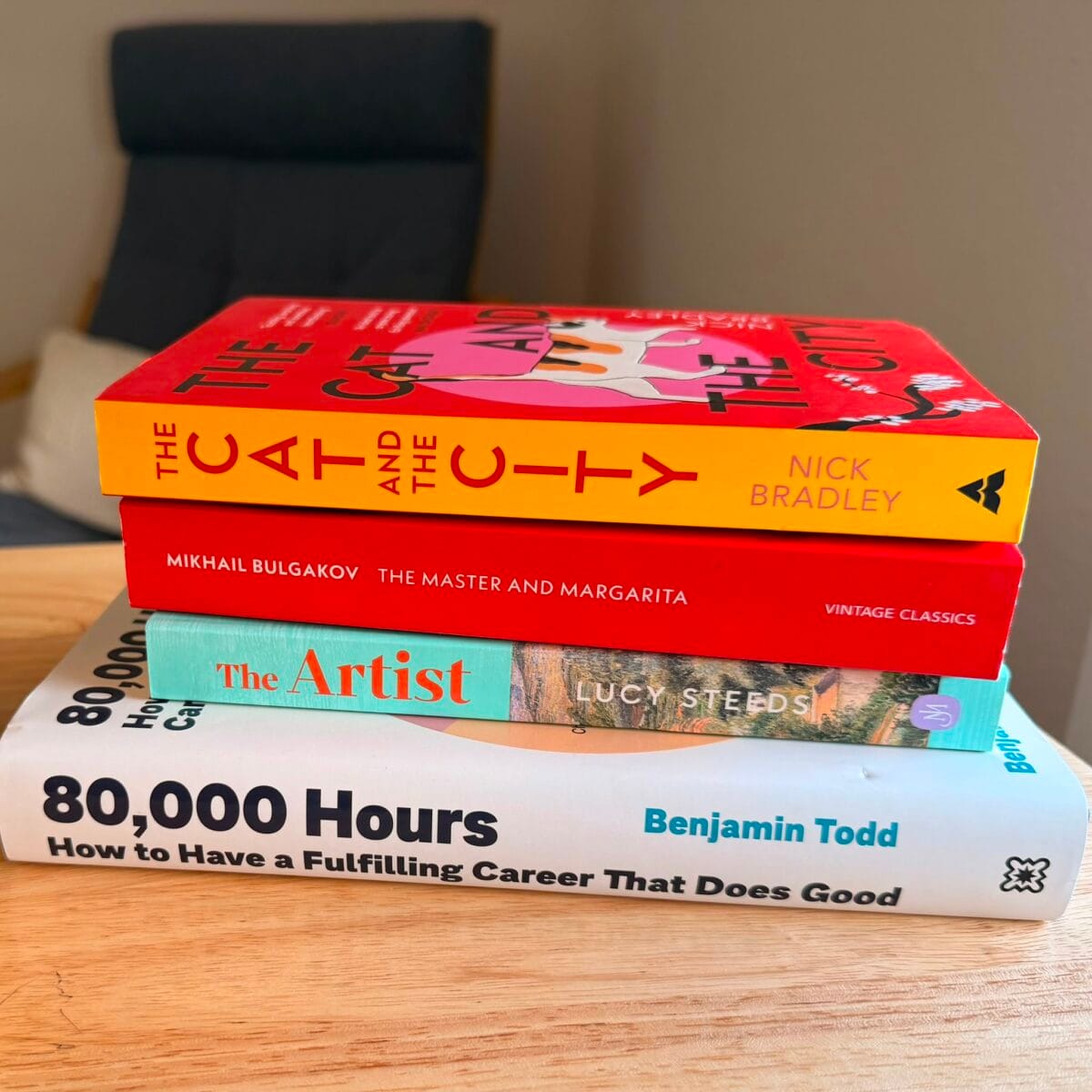
The diary softens. The pace changes. Every year I find myself wandering into my favourite local bookshop, leaving with a small pile of books that somehow found me rather than the other way around. It has become a quiet ritual. A way of marking the transition from doing to simply being.
Perhaps that is what a pause really offers.
Not an absence.
A different kind of presence.
There can be an understandable anxiety when therapy takes a break. A worry that the work somehow stops. That without the familiar rhythm of the weekly session, something important might be lost.
I rarely find that to be true.
Often, something else begins.
The space between sessions has always been part of therapy. It is where life continues to unfold. Where experiments become lived experience. Where awareness quietly finds us whilst we are making dinner, walking the dog, sitting in traffic or lying awake in the early hours.
Not because we were trying to notice.
But because we had enough space to.
This is why I often encourage clients to keep the time that would have been their session.
Not as homework.
Not to analyse themselves.
Not to try and recreate therapy.
Simply as an appointment with themselves.
An hour without needing to achieve anything.
An hour to wonder.
To breathe.
To sit with a cup of tea.
To write a few thoughts if they come.
Or simply to notice what it is like to have nowhere else to be.
Over the past few months many of my clients have been working with The Invitation—a gentle companion for self-reflection during exactly these moments. Not as a workbook to complete, but as something to return to when words feel far away. A place to pause, notice and meet themselves with curiosity.
Because this has always been the hope.
That the way we relate to ourselves inside the therapy room slowly begins to exist outside of it too.
That awareness becomes less of an exercise and more of a way of living.
Gestalt has always held a beautiful paradox.
The more we force ourselves to change, the further away change often seems to move.
And yet, when we become willing to stay with our experience as it is, without immediately trying to fix it, organise it or escape it, something begins to shift.
Not because we made it happen.
Because we made room for it.
Perhaps that is why rest can feel surprisingly uncomfortable.
Without the usual momentum, there is more space to encounter ourselves.
The parts we have been too busy to notice.
The grief that has been waiting patiently.
The joy we have rushed past.
The tiredness we have explained away.
The longing we have not yet given a voice.
Sometimes slowing down isn’t about becoming less productive.
Sometimes it is about becoming more available.
More available to ourselves.
So whilst I’ll be away over the next few weeks, this is the invitation I leave with you.
Keep your hour if you can.
Not because you should.
Because it belongs to you.
Protect it.
Be curious about what emerges when there is nothing to perform, nothing to solve and nowhere else you need to be.
You may find that the therapeutic work was never only happening between us.
You may discover that it has quietly become the way you meet yourself.
And if that happens, then perhaps the pause wasn’t a break from the work at all.
Perhaps the pause was the work.
Working Together
At GeistLife, Gestalt therapy is not just a theory. It is a way of working that values awareness, relationship and the courage to explore experience honestly.
Whether you are coming to therapy as a client or seeking supervision as a practitioner, the aim is the same: to create a space where real contact can happen and where growth can unfold at a human pace.
If this way of working resonates with you, you can learn more about working together here:
- Individual therapy
- Clinical supervision
- Professional development for therapists
Or feel free to reach out if you would like to explore whether this approach might be right for you.


