
It doesn’t take long to feel the weight of the world.
Open the news and there are wars.
Scroll for a few minutes and there is anger.
Stay there long enough and something in the body tightens. The world can begin to feel harsher, more brittle.
In times like this people often close parts of themselves.
Joy can feel indulgent.
Creativity can feel unnecessary.
Play can seem like something to postpone.
Yet this is often when creativity matters most.
War is an act of destruction.
Creativity is an act of building.
War tears apart landscapes, homes and lives.
Creativity gathers what is here and shapes it into something new. A sentence. A melody. A garden bed. A conversation. An idea that did not exist before.
Creation has always been close to us.
Long before professions or institutions existed, people were already making things.
Hands pressing pigment onto cave walls.
Someone carving a tool from stone.
Stories told around a fire.
The impulse to make something out of what is already here belongs to us.
Perhaps it always has.
Creativity is not simply about art.
It is about participation in life.
It can feel less like a skill and more like a form of aliveness. The same movement that breathes, that grows, that reaches towards something not yet formed. Not something we possess, but something we come into contact with when we are present enough to notice it.
A Gestalt Perspective
Gestalt therapy understands human beings as part of a field. We shape our environment and our environment shapes us.
Creation happens at this meeting point.
When someone writes, paints, cooks, builds or imagines something new, they are not escaping reality. They are responding to it. They are transforming what exists into something else.
Gestalt therapy describes this as creative adjustment. The capacity to meet the world as it is and still find a way to respond.
In times of chaos this capacity becomes strained. People can become caught in reactivity. Anger. Fear. Helplessness.
Creativity interrupts that cycle.
It restores movement.
This can also be understood through the cycle of awareness.
We move through rhythms of sensing, becoming aware, mobilising energy, making contact, and withdrawing. When this flow is intact, energy builds, finds expression, and completes.
When the cycle is interrupted, that energy does not disappear. It becomes held. Tightened. Turned inward or stuck.
Over time this can leave the organism out of balance, with energy held rather than moving towards contact.
What might have become expression becomes tension.
What might have become creativity becomes restlessness, anxiety or numbness.
Creativity is not something we need to force.
It becomes available when energy is freed.
As awareness deepens and we begin to recognise our needs and respond to them, something shifts. The energy that was tied up in holding or repeating old patterns begins to move again.
That movement can become creative.
Not only in what we make, but in how we speak, how we choose, how we relate, how we shape our lives.
Born in a Time of Upheaval
Gestalt therapy itself emerged during a period of global upheaval.
Its founders were shaped by the displacement and uncertainty of the Second World War. Both Fritz Perls and Laura Perls were forced to leave Nazi Germany, moving across countries before settling in the United States.
Out of that disruption something new emerged.
A practice grounded not in fixing people, but in restoring awareness, presence and the capacity to respond to life.
Laura Perls held a deep respect for the ordinary rhythms of living. She spoke about therapy as a return to contact with one’s body, environment and relationships. In her view, creativity was not reserved for artists. It appeared whenever someone found a new way of responding to life. Speaking where they once stayed silent. Choosing where they once felt trapped. Noticing something alive that had long been ignored.
In this sense creativity is less about producing something and more about allowing life to move again.
Making Things
Creativity does not need to be grand.
It appears in ordinary moments.
Someone writing a few lines in a notebook before the house wakes up.
Someone picking up a paintbrush after years away from it.
Someone cooking slowly instead of eating in front of a screen.
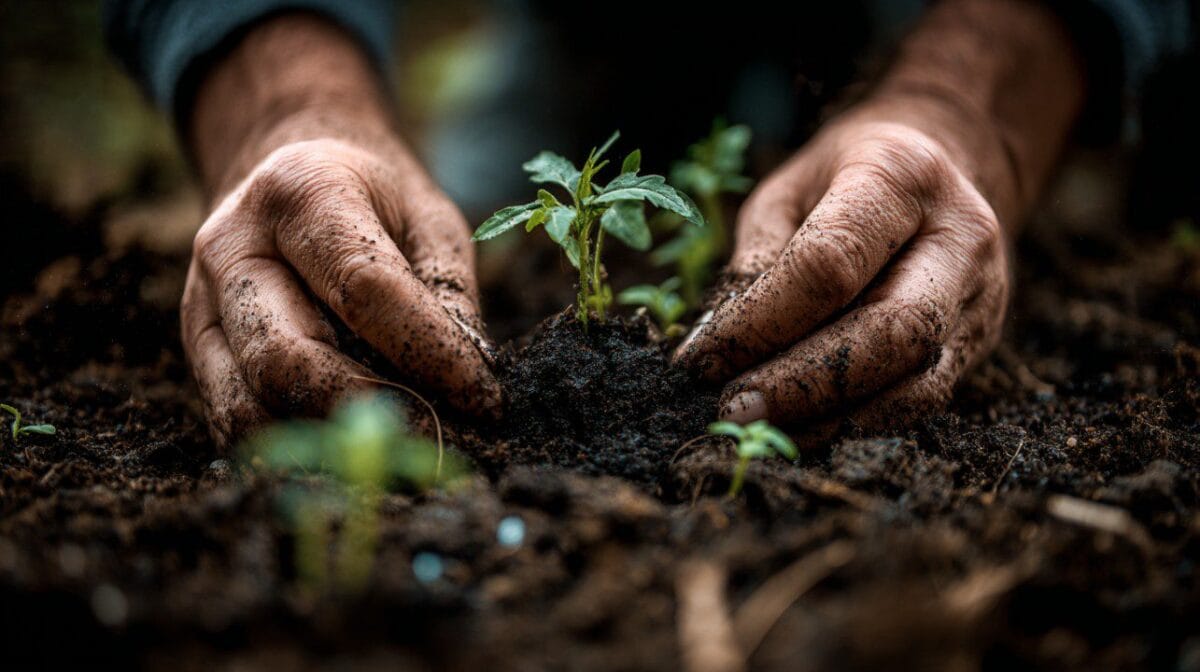
Someone planting herbs and noticing the first green shoots appear.
These acts reconnect us with something essential.
They remind us that we are not only witnessing the world.
We are shaping what comes next.
It is easy for attention to become captured by what is breaking.
To watch.
To scroll.
To absorb.
And in doing so, to feel as though everything is happening to us.
But there is another position available.
To respond.
To shape.
To make.
In that sense, creation is not separate from the world. It is a way of participating in it. A way of influencing what takes form, rather than only absorbing what is already there.
Creative acts have always helped people metabolise what is happening around them. To make sense of confusion. To express what cannot easily be said. To bring something into form that allows both the individual and the wider field to process and understand.
A Different Kind of Resistance
In times dominated by destruction, creation becomes a form of resistance.
Not loud or reactive, but steady.
A refusal to abandon life’s generative force.
To make something.
To imagine something.
To bring something into existence that was not there before.
Creation reminds us that the story is not finished.
And perhaps this is how the world has always continued.
Not only through those who destroy,
but through the hands that keep making things.
When was the last time you created something?
Where is your energy right now
moving
or held?
And what might begin
if it were allowed to move again?
Working Together
At GeistLife, Gestalt therapy is not just a theory. It is a way of working that values awareness, relationship and the courage to explore experience honestly.
Whether you are coming to therapy as a client or seeking supervision as a practitioner, the aim is the same: to create a space where real contact can happen and where growth can unfold at a human pace.
If this way of working resonates with you, you can learn more about working together here:
- Individual therapy
- Clinical supervision
- Professional development for therapists
Or feel free to reach out if you would like to explore whether this approach might be right for you.


